
Whether you’re a commercial producer selling good quality meat lambs or a seedstock producer with excess lambs that just don’t make the cut as breeding stock, determining where to market those lambs to get the best return should be your goal. Markets for meat lambs vary regionally based on sale venues and customer preferences for age, size, finish, and time of year marketed. Some general points to consider:
- Determine what size lamb is preferred in your area. Market preferences for live lambs can vary between weanlings (50-60 lbs) to lambs weighing 110-140 lbs.
- Regardless of age, thin or poorly conditioned lambs bring less per pound than fleshier lambs
- Local or regional sale barns typically operate on commission. Call the sales manager before you plan to bring lambs. Often, sales managers are eager to help you get a higher selling price and will help market your lambs in advance of the sale
- Prices for meat lambs are typically higher in the off season, from Thanksgiving to Easter. However, selling for less per pound in the summer or early fall may still be more profitable if it saves you the cost of feed and labor or frees up pasture space
- Target non-traditional markets by selling your animals prior to key religious holidays when prices for lambs are generally higher. These non-traditional markets prefer smaller (60-90 lbs.) “intact” ram lambs that have not been castrated or docked. This article gives more information on what type of animal is preferred for each holiday, https://extension.psu.edu/marketing-lamb-and-goat-for-holidays
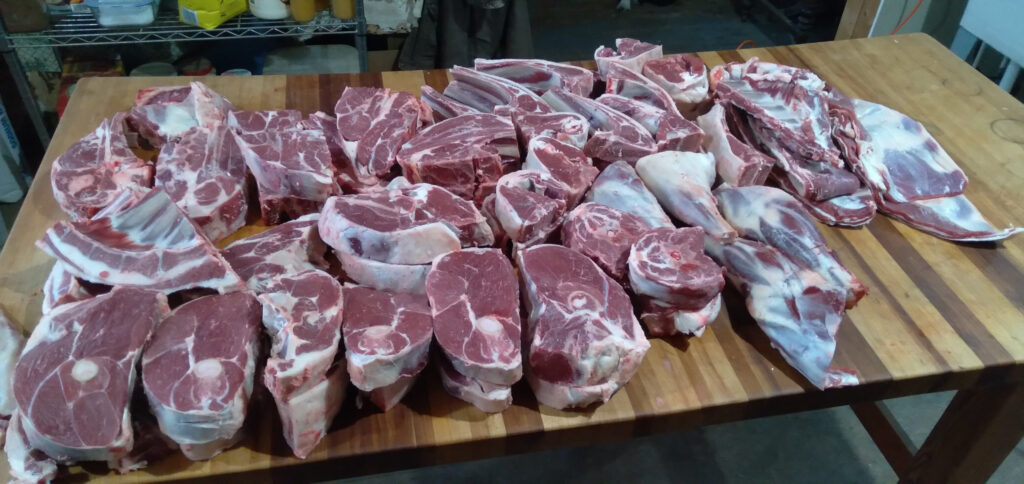
Examples of profitable marketing opportunities Katahdin producers are using to sell surplus meat lambs include:
Commercial or Traditional Lamb Markets:
- Graded Sales are typically larger sales that sell thousands of sheep per week. They generate a market report that includes the weights and condition of sheep, as well as the price/lb that was paid at their sales. In most cases, the seller pays commission per animal sold. Locate USDA Graded Sales by state via the following link: https://www.ams.usda.gov/market-news/sheep-auction-reports
- Local or regional sale barns are typically smaller sales. Most also generate sales reports, but they are much less detailed than the graded sales reports. Lambs are auctioned in the sale ring, and the seller pays a commission based on the price paid per lamb or per lot. If you have multiple sales barns in your area, compare their historical prices, there can be large differences in prices depending on how many sheep buyers attend the different sales.
- Lamb buyers or brokers will fill customer orders in bulk by buying lambs directly off the farm/ranch. Prices may be lower per animal but may save you the cost of transportation and commissions.
Niche Markets:
- Selling USDA or state inspected lamb by individual cuts off the farm or via the Internet (selling lamb by the cut requires a USDA or State-inspected label)
- Capitalizing on value-added labeling, such as organic, grass-fed, or humane certified (USDA approval is required to include organic or grass-fed on the label)
- Selling lambs weighing 60-80 lbs. to a Halal butcher
- Selling lambs at weaning to a local farmer to finish for his own meat customers
- Direct marketing by the cut at farmers markets or through co-ops
- Direct marketing whole lamb and delivering to a local processor for customer pick-up
- Direct marketing of inspected lamb to restaurants, either by the cut or whole lamb
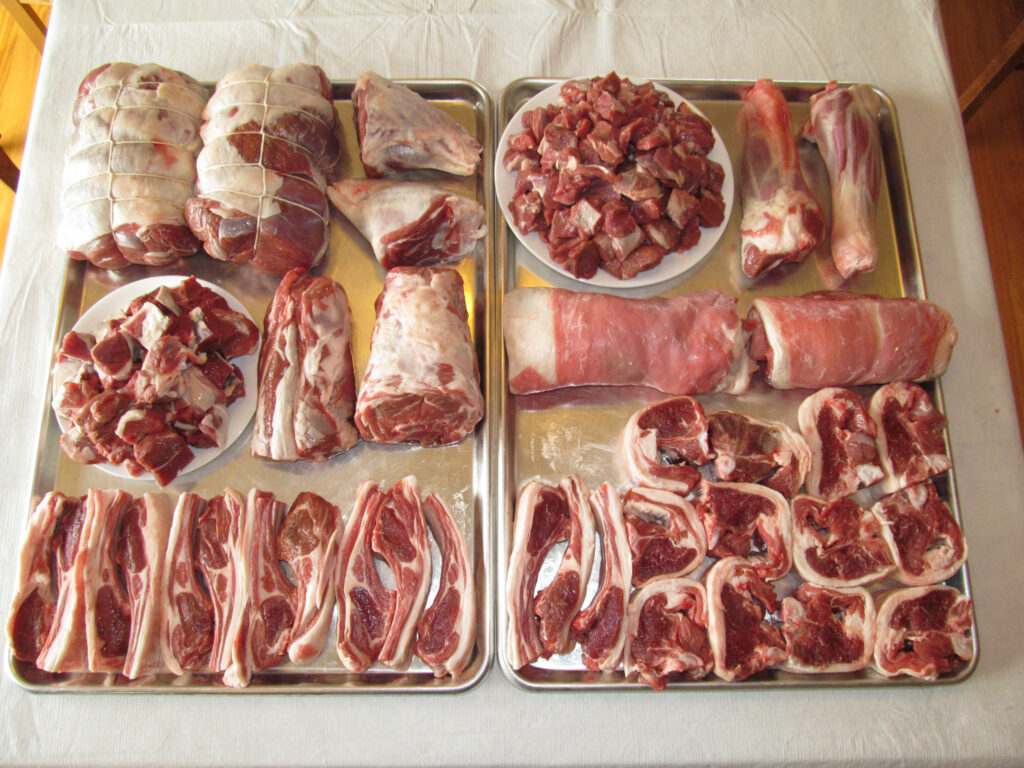
Research your marketing options well in advance and be prepared to market the size and type of lambs your customers prefer. Lambs destined for slaughter must meet drug withdrawal periods for any that have been treated with medications, like dewormers or antibiotics. Withdrawal periods for drugs will vary. Learn more about preventing drug residues from entering the food supply: https://share.google/42S6C1IBXozwLIBEh
Don’t be afraid to think outside the box; value-added niche marketing can be very profitable. Keep in mind that some options are subject to federal or state regulations (USDA inspection/labeling) or specialty certification (organic). Check with your state to see what the requirements are for legally selling meat in your location. By determining your markets ahead of time, you can maximize the prices received for your product.
Jim Morgan, EAPK Member, Arkansas

