
Creep feeding is a means of providing supplemental nutrition to lambs before weaning. Not all producers creep feed their lambs since most can easily thrive on mother’s milk and good quality hay or forage. For those that lamb in winter, under drought conditions, or have poor quality hay/forage, creep feeding allows producers to market their lambs sooner by meeting the nutritional needs of their lambs while improving body condition and growth.
Advantages:
- Accelerates growth and helps smaller triplets or struggling lambs to thrive.
- Helps lambs reach ideal weight earlier for specific markets
- Acts as a nutritional supplement for lambs on poor quality hay or pasture, especially during drought or when pastures are dormant.
- Improved nutrition boosts immunity to disease and parasites. Coccidiostats can be added to prevent outbreaks. Allows correction of vitamin and mineral deficiencies.
- Creep feed promotes development of the rumen, which is especially important for lambs weaned before 90 days of age.
- When nutritional needs are met, weaning becomes less stressful.
- For accelerated breeding programs, earlier weaning allows ewes to recover body condition sooner.
Disadvantages:
- Creep is usually more expensive to feed than just hay or forage.
- Requires more labor for the producer, especially when hand feeding.
- Nutritional profile of the grain must be carefully considered. Feed should be easily digestible, palatable, and kept fresh and dry.
- With pasture creep pens (and open barns), waste occurs when grain becomes wet or contaminated by birds, bugs, and/or rodents.
- Excess grain consumption puts lambs at risk of digestive disease and/or rumen dysfunction: scours, bloat, acidosis, polio, overeating disease, urinary calculi.
- Usually requires an investment in equipment: automated feeders, feed troughs, creep gates, corral panels, etc.
- Early vaccination with CD&T is recommended to prevent clostridial disease.
- Moving creep areas on pasture can be cumbersome especially in rotational grazing systems. Consider building a smaller, portable creep station on skids.
Creep feeding pens should be set up in a convenient location close to where the ewes congregate in the barn or outdoors where lambs can see ewes grazing in the pasture. In warm conditions, it should be located in a shady area with easy access to clean water. There is less risk of rumen disorders when the creep pen includes good quality, leafy hay.
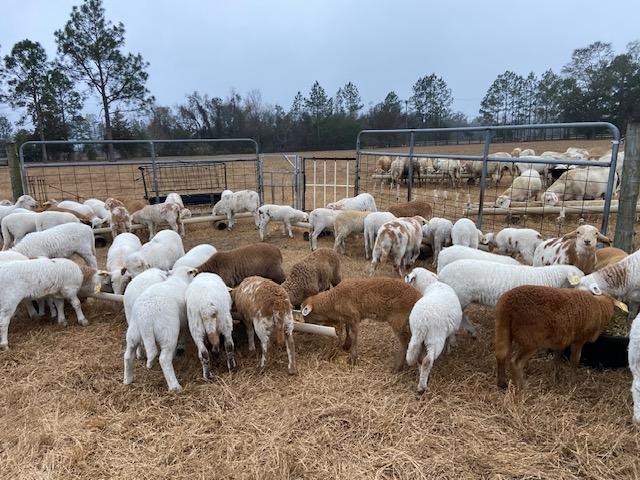
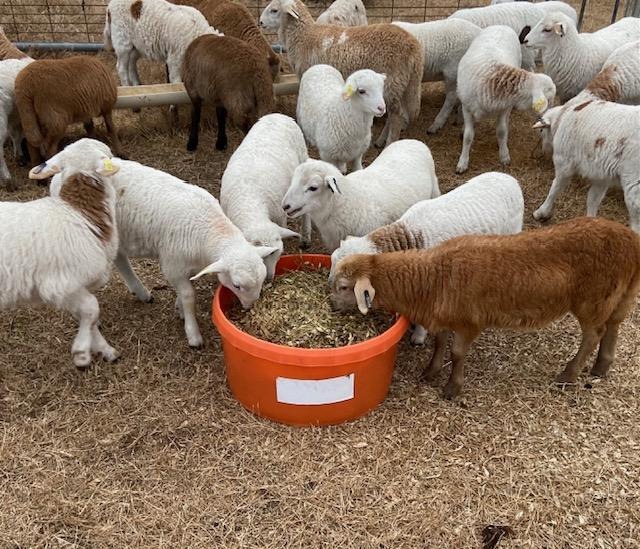
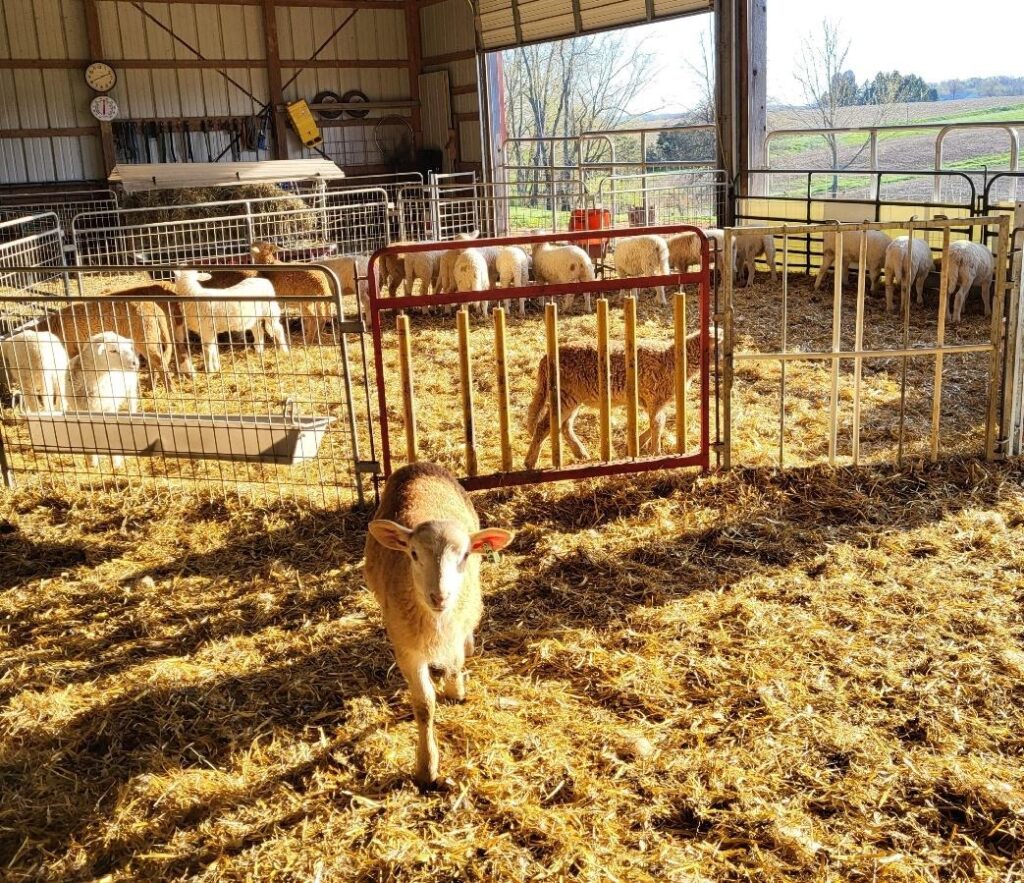
The creep area above is set-up between two adjacent paddocks, the ewes are behind the creep gates (one of which is a walk-thru gate) allowing easy access to both sides.
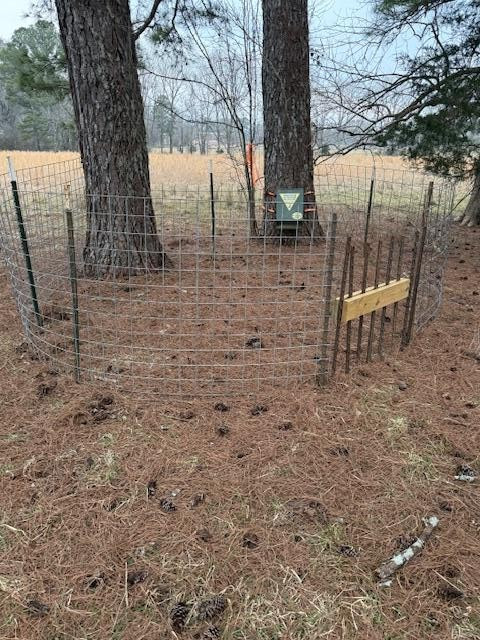
Here a small creep pen was built using T-posts and woven wire fencing and set up in a shady area. A bulk poly-feeder is attached to a tree and easy to reach for small lambs. Small-bulk feeders protect the feed from harsh weather and also allow you to control the flow of feed. A homemade creep gate was devised using wood and rebar. As lambs grow, the spacing of the rebar can be adjusted. A tub of soft, leafy hay placed just inside the gate could help lure lambs into the creep pen.
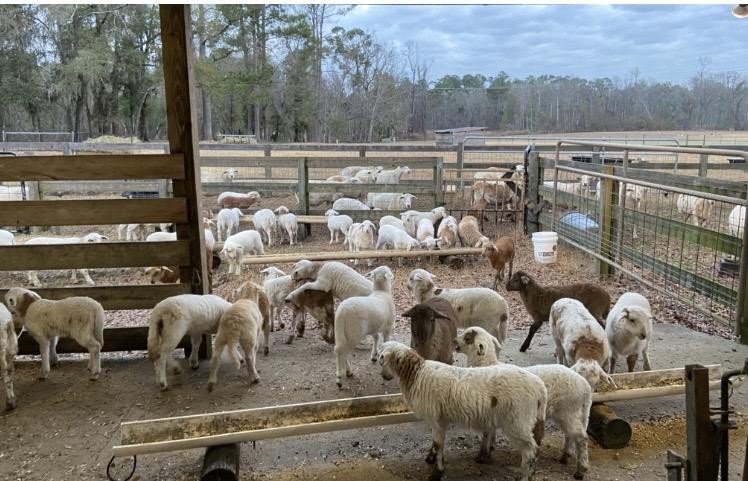
This large creep pen allows some feeders to be under roof while still having access to an outdoor area close to where the ewes are fed. The advantage to a covered area is that orphan lambs that remain with the flock can seek protection and have access to dry feed and water during bad weather. Feed troughs are made from a 10’ PVC pipe (6”-8” diameter) cut lengthwise. Two-foot sections of old fence posts serve as a base to lift the feeder off the ground and are secured to the PVC with lag bolts. Each end has cording attached so that it can be pulled by an ATV, or by hand.
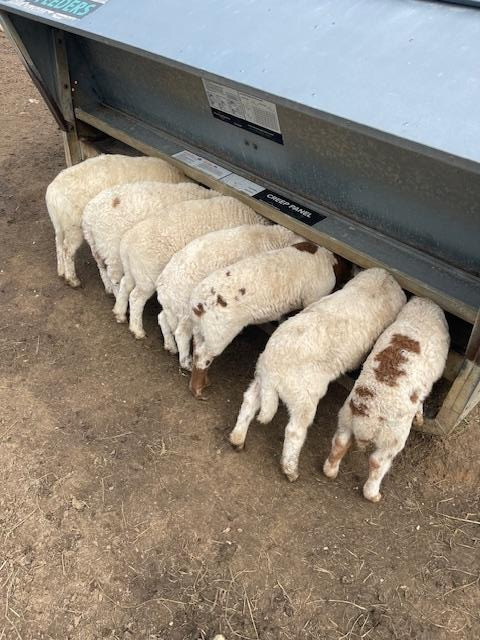
Automated feeders are more expensive but can easily reduce labor since large amounts of feed can be loaded into the feeder less often than in hand feeding systems. The creep panel can be adjusted as lambs grow and are used to keep ewes out of the creep feed. Each side of the controlled feeder can accommodate different types of feed for both ewes and lambs. This feeder is easily moved with a front-end loader when full or can be pulled with an ATV when empty.
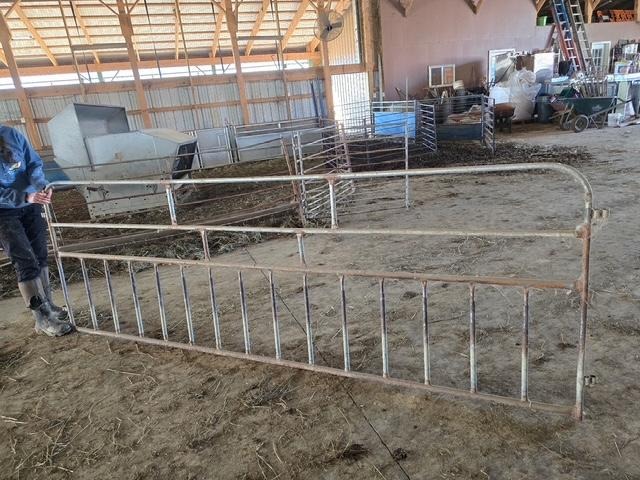
Below a creep gate was made for a larger pen using a 10’ fence gate and EMT galvanized conduit. Openings are 7” x 14” using ½” conduit welded vertically and then covered by ¾” tubing (conduit or PVC) so that each spindle rolls by adding a washer at the bottom.
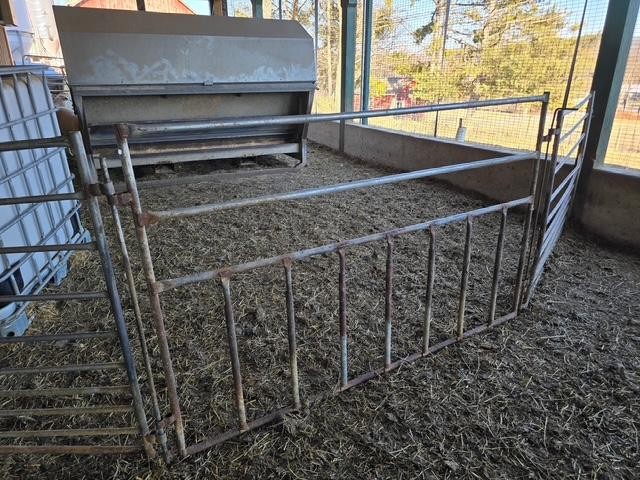
Above is another version of a homemade creep gate set up inside the barn surrounding an automated livestock feeder. Unfortunately, with most creep gates, smaller yearling ewes may be able to squeeze their way into the creep area or get stuck trying to get in. Adding a lower horizontal bar will help prevent them from entering.
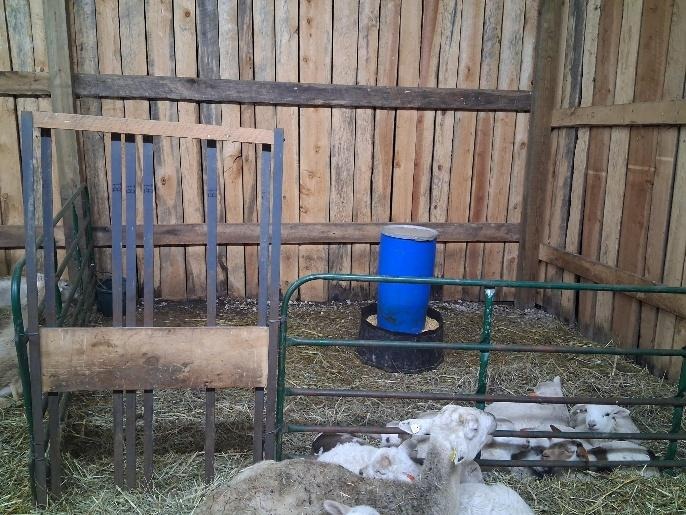
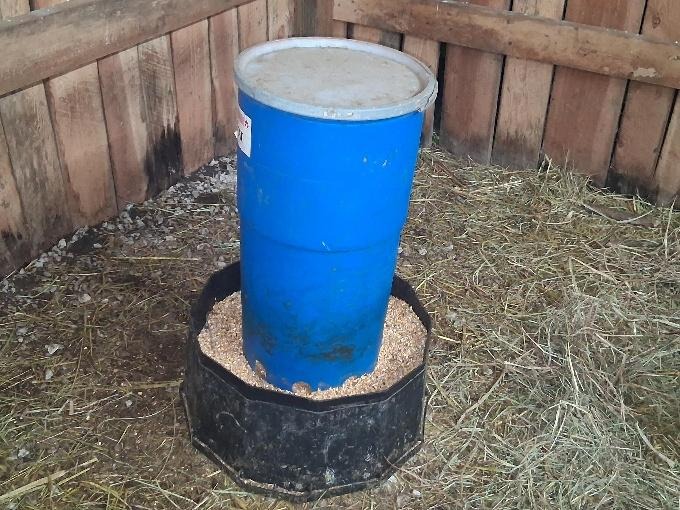
A creative solution for a creep gate and feeder is illustrated in the creep pen above. The gate was made by using wood and angle iron, the openings can be adjusted wider as the lambs grow. The bulk feeder is made from a large plastic drum with holes drilled at the bottom so that the feed refills automatically.
Ideally, creep pens inside the barn should be located in a well-lit area rather than in a dark corner. Below is a strategically placed creep pen with natural light and ventilation. A homemade wooden bulk feeder encourages lambs to enter while their dams are close by.
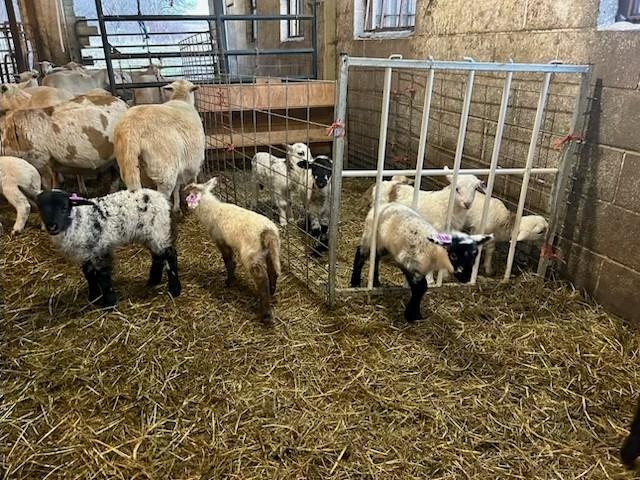
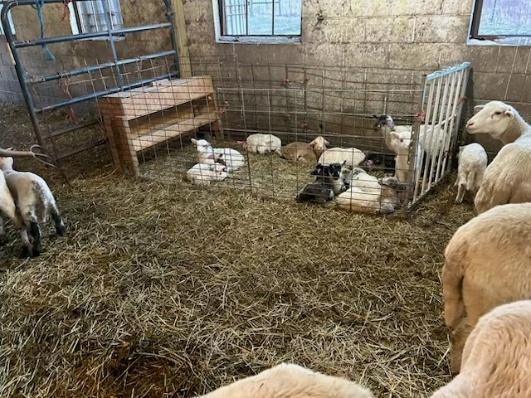
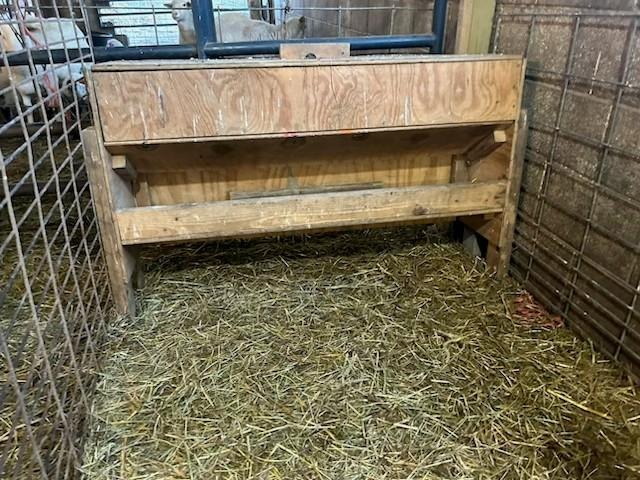
Another photo of a spacious creep area set up in the barn with ample natural light and ventilation. Feeders are located on the perimeter to make hand feeding easier.
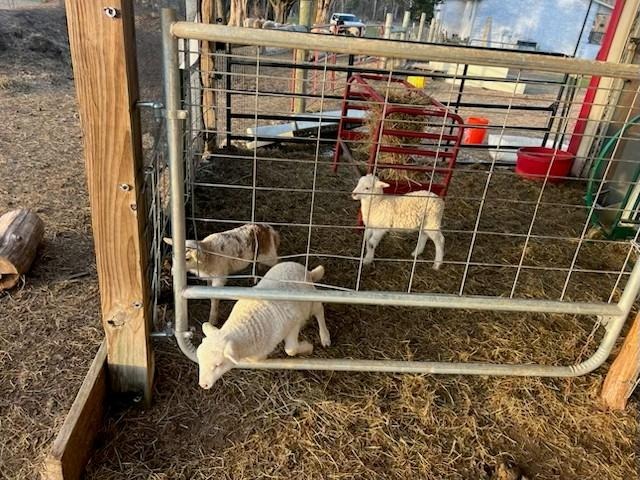
And when all else fails, hang a gate upside down. Motivated lambs figure out very quickly how to access the tasty creep feed by going through the wide opening at the bottom.
The key to a functional creep pen design is selecting a good location that has plenty of fresh air and natural light. If a clean water source is not located in the creep pen, it should be accessible nearby. Since creep pens are temporary, design it so that you can adjust the size each year based on the number of lambs it will serve. A creep pen that is approximately 12’ x 15’ should comfortably accommodate around 100 lambs (1.5-2 sq ft/lamb).
Equipment dealers offer a variety of adjustable creep gates, panels, and feeders that you can purchase, but they can get expensive. With a little ingenuity, unused equipment and supplies found on the farm (gates, corral panels, lumber, wooden pallets, T-posts, and fencing) can be repurposed to make a workable creep pen.
By: Roxanne Newton, Hound River Farm
*Thanks to the following producers for sharing their photos and designs: Tom Perkins – Con-O-Creek Farm; Colt Robinson – 4R Farms; Kathy Bielek – Misty Oaks Farm; Brad Carothers – New Slate Land Management; Dan Turner – Ewe Lamb Right Farm; Leanne Reed – Reed’s Family Farm.

