
Adoption of reproductive technologies (artificial insemination and embryo transfer) is commonplace in the dairy cattle industry, significant in the beef cattle industry, and is becoming more common in the show sheep industry. However, utilization of this technology has been limited in the production-oriented sheep sector. That said, potential exists for rapid genetic improvement and production of elite breeding stock may aid in offsetting added costs.
These tools allow breeders to intensify selection for elite genetics and increase genetic turnover. Artificial insemination provides the opportunity for one ram to breed significantly more ewes than he could by natural service and breed ewes in multiple locations at the same time. Additionally, ram lambs can be proven at a younger age. It is not uncommon for ram lambs to have 100+ progeny at a year of age through artificial insemination.
Artificial insemination in sheep requires a laparoscopic (LAI) procedure where semen is deposited directly into the uterine horns due to the structure of the sheep cervix. Therefore, it is more invasive and costly than in cattle contributing to its limited use. Embryo transfer (ET) allows for selection on the female side as well. Embryo transfer involves superovulating a ewe (stimulating her to ovulate a greater number of oocytes), breeding her through LAI, and then collecting embryos (flushing) on day six of gestation. Embryos can be fresh transferred to recipient females or frozen for future use. Recipient females also need to be six days post-heat when embryos are transferred using a similar procedure as LAI. Embryo transfer allows a single ewe to generate 3-10 lambs per flush and she can be flushed every 45-60 days. It is possible for a single ewe to have 20+ lambs in a single season through ET. Elite maternal lines can be replicated far faster with ET than a ewe could ever do herself.
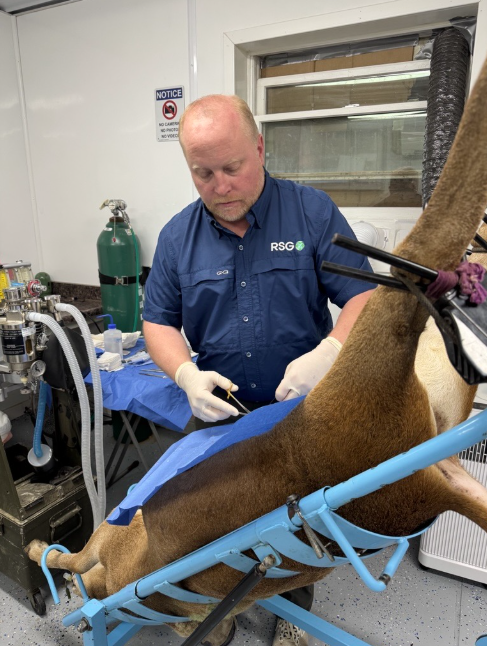
The challenge with this technology relates to surgical costs, synchronization hormones, labor and infrastructure to handle ewes multiple times
around the breeding season. Additionally, LAI and ET require surgical procedures performed by a trained veterinarian. Success is improved with greater veterinary expertise; yet veterinarians with this training and proper equipment are limited. Greater producer interest and more veterinarians may be willing to offer these services if the demand increases.
As an example of these costs related to embryo production, I have summarized flush data from the NC State flock this year. NC State flushed six ewes this fall for our NC State Food Animal Initiative Project related to improving selection for feed efficiency through reproductive technologies. This project may also serve as a demonstration of how this technology can be utilized in production-oriented Katahdin sheep, costs, and success rate.
| Metric | Averages | Comments |
|---|---|---|
| Number of Donors | 6 | Donors flushed twice (Oct & Nov) |
| Unfertilized Oocytes | 4.9 | Oocytes collected, but not fertilized (per donor per flush) |
| Degenerate Embryos | 2.9 | Oocytes fertilized but failed prior to collection (per donor per flush) |
| Viable Embryos | 9.4 | Viable embryos collected for freezing/transfer (per donor per flush) |
| Total Oocytes and Embryos | 17.3 | Sum of previous metrics (per donor per flush) |
| Total Cost/Donor/Flush | $2,575.75 | Cost includes:Donor and recipient synchronization, LAI and ET surgery, freezing & transfer of one embryo per recipient |
| Cost Per Viable Embryo | $273.53 | Cost includes:Donor and recipient synchronization, LAI and ET surgery, freezing & transfer of one embryo per recipient |
| Cost Per Live lamb | $455.88 | Assuming 60% embryo retention by recipients |
Embryo production was higher than industry average with 9.4 viable embryos per flush compared to most show sheep averaging around 6. There may be initial sticker shock when cost per live lamb is considered. However, consider the value of lambs produced. Lambs will represent your best ewe(s) and most elite sire(s). Instead of ½ of your lamb crop being out of flock average or below average ewes, they could be offspring of your best 1-3 ewes. As an example, you could generate multiple full sibling elite stud rams that can be utilized in multi-sire breeding groups where all lambs produced would be close to ½ sibs. It would take years to generate these stud rams otherwise. Additionally, a consistent set of replacement ewe lambs
could be generated that represent your elite maternal genetics to create a uniform ewe flock hat breeds true
Genetic diversity may be reduced when reproductive technologies are implemented and trade offs between genetic improvement and diversity should be considered. Excellent management is needed to ensure the greatest level of success when implementing these tools. Cost per live lamb could be reduced if more viable embryos were produced per flush, embryos were transferred fresh vs. frozen, two embryos transferred per recipient vs. one,
and recipient embryo retention was increased. Each of these and the factors that contribute should be considered. While a significant investment, this technology has the potential to rapidly advance the genetics of a flock while improving genetic consistency and uniformity and control of breeding and lambing season. Reach out if you would like additional information and more results of this project will be shared in the coming year.
Comments and questions can be sent to blogs@easternalliancekatahdins.com or join the conversation at https://www.facebook.com/easternalliancekatahdins
By: Dr Andrew Weaver, NCSU Small Ruminant Specialist

