
In August we euthanized a Katahdin yearling ewe that was later diagnosed with large cell lymphoma (LCL), a cancer of the blood that leads to leukemia and tumors in lymph nodes, heart, lungs and other organs.
LCL and other neoplastic (tumor-producing) disorders are thought to be rare in sheep according to surveys conducted at animal slaughterhouses, with an overall tumor incidence of around .002 percent, compared to .23 percent in cattle (ref. 1).
Symptoms
We first noticed the ewe’s lack of appetite. She would rush to the hay feeder with the others, but eat very little.
Since the poor appetite was accompanied by pale eye membranes and weight loss, we decided to deworm her, dose with Rooster Booster B12 and drench with milk replacer. There was no improvement, and we measured a weight loss of 22 pounds in two-and-one-half weeks. We also noticed blood in her urine.
One of our veterinarians measured the ewe’s temperature at 105.2 degrees and noted decreased rumen contractions and increased respiratory effort and rate, treating her with Excede, Banamine and vitamin B complex. A fecal showed a low reading of about 150 eggs per gram.
Two days later, with the ewe declining, we were back for blood work. The blood in the syringe looked watery, the first sign of a low red blood cell count, and every metric measured through the Complete Blood Count (CBC) and chemistry profile was abnormal.
The tests showed anemia “low enough to warrant a blood transfusion,” according to Mary Rabke, D.V.M., as well as increased white blood cells, decreased neutrophils, very high kidney values and elevated liver values and muscle enzymes.
“The anemia itself was concerning for life, and the severely elevated kidney values indicated renal failure,” Dr. Rabke said. “The elevated liver values could have been from not eating (causing fatty liver), and the muscle enzymes were likely from the same reason as the ewe was breaking down muscle to supply energy.”
Necropsy
We decided to euthanize the ewe, and Dr. Rabke offered to conduct a necropsy.
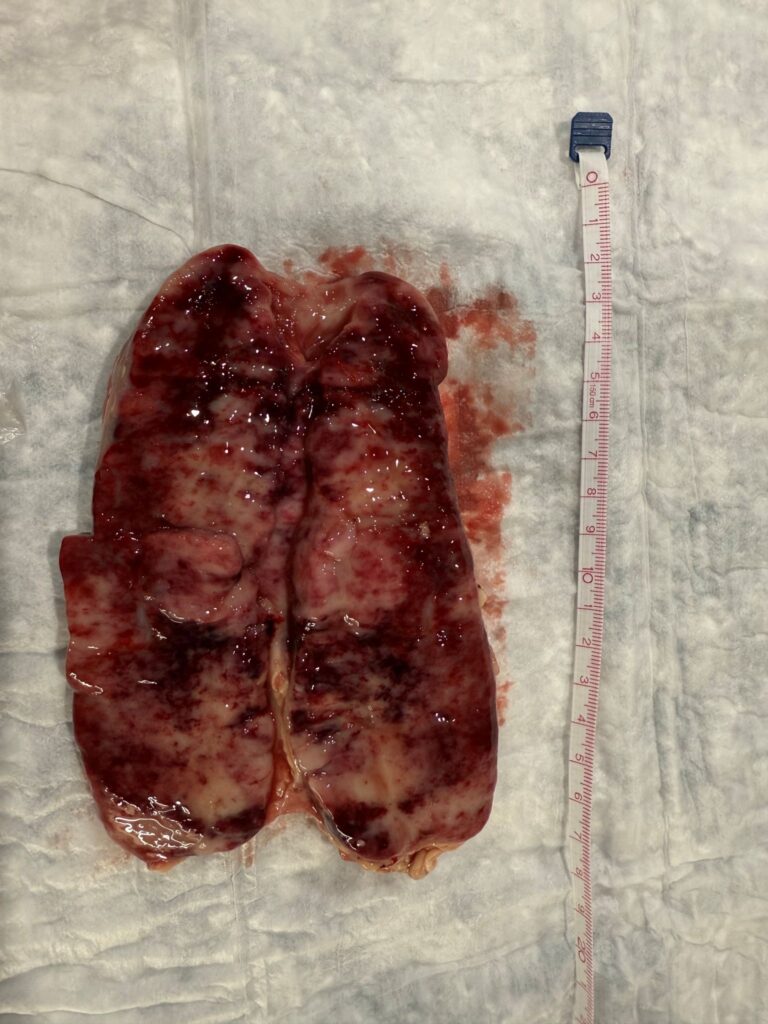
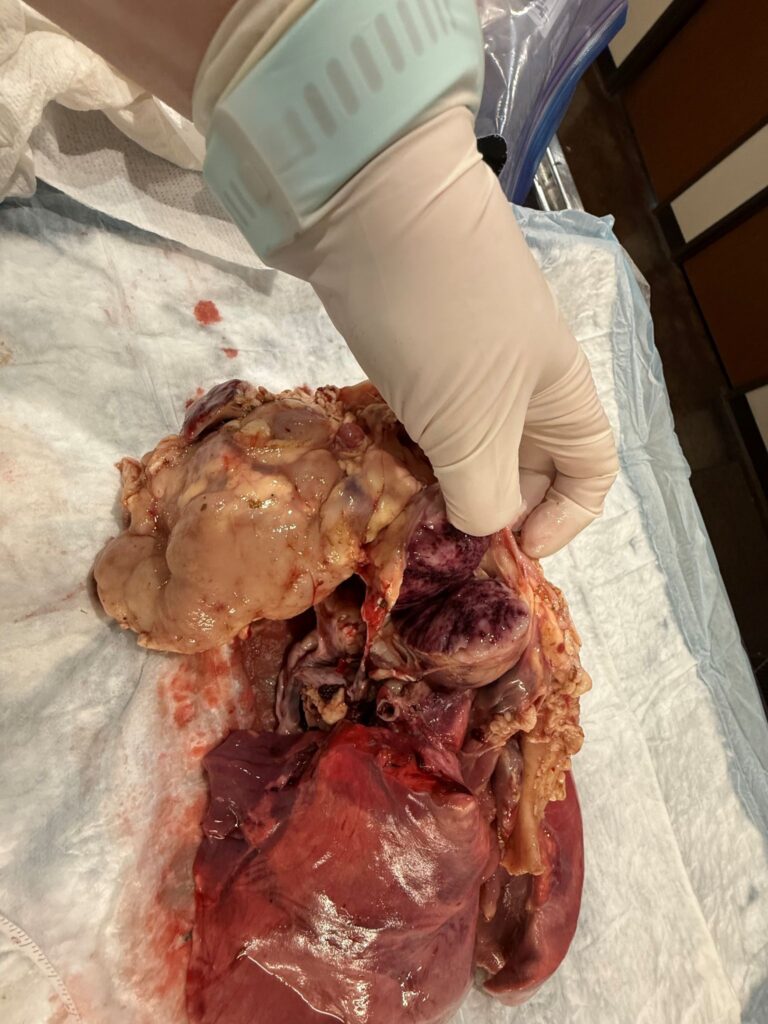
The abdomen appeared normal, but the thoracic cavity showed severely enlarged lymph nodes on top of the lungs and abscesses along the lungs’ edges. A large 14-cm mass was on top of the esophagus, preventing it from dilating with food. The covering of the heart also contained a mass, and the thymus was enlarged.
Tissue samples were sent to the Wisconsin University Pathology Lab, which determined the large cell lymphoma diagnosis by examining small samples of the masses under a microscope.
Two Main Causes
Lymphoma in sheep is a type of cancer that usually appears randomly in individual sheep, not as an epidemic. The disease is always fatal, with diagnosis often made after death.
Tumors can take months or years to appear, according to Dr. Rabke, or progression can be rapid.
While many cases of lymphoma are idiopathic, i.e. occurring without a known cause, others can be triggered by exposure to Bovine Leukemia Virus (BLV), a common disease in cattle. In our case, we did not identify the cause.
Sheep are very susceptible to experimental inoculation with BLV and develop tumors more often and at a younger age than cattle. (ref 2).
On the farm, BLV spreads through the blood, often as the result of shared needles or tools. Large biting flies can transfer blood. The virus can also cross the placenta or be transmitted through colostrum or milk.
To prevent BLV, Dr. Rabke said, keep cattle and sheep separate, test incoming animals and do not reuse needles.
References
- Veterinarian Key: Fastest Veterinary Medicine Insight Engine, Chapter 3 Neoplasia, Beth A. Valentine
- Wikipedia: Bovine leukemia virus
By: Judy Sheridan – Bluestem Farm, TX
Have you had sheep with unusual diseases or strange presentations of common ailments?
We would like to share your experience with the rest of our EAPK community. Please send your contribution to blogs@easternalliancekatahdins.com

