
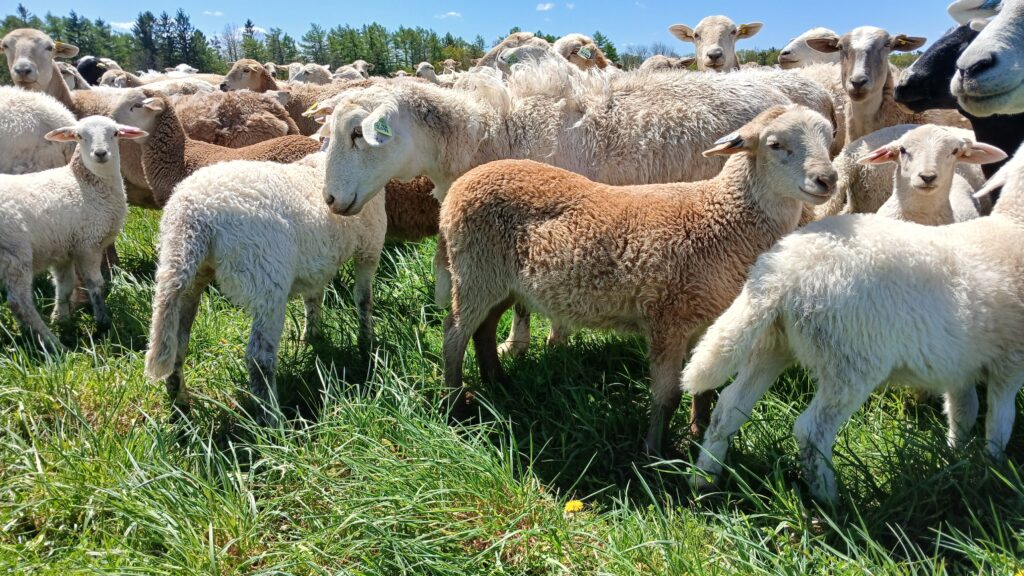
For the purposes of this article, we assume that lambs will be weaned around 60-90 days of age. At 30 days old, lambs’ rumens are still developing, and they are not able to survive on just forage. They still need milk and/or adequate amounts of creep feed to thrive. Lambs that are fed only milk and forage should ideally not be weaned until 90-100 days of age, when their rumens are fully functional. Creep fed lambs can be weaned earlier, as long as you continue grain supplementation after weaning.
Making sure that your lambs receive adequate nutrition during this time is a good investment in the future of your lamb crop. Larger lambs, in better body condition, handle the stress of weaning a lot better than smaller, skinny lambs.
Nutritional disorders and coccidia are the most common causes of illness in this age range. While worms tend to be more of an issue with older lambs, in warm climates or hot weather, lamb losses due to worms are possible before weaning, too.
Starvation
Some lambs that did well initially just peter out in this time frame due to inadequate nutrition. While the lambs are small, the ewe might be able to produce enough milk, but as lambs grow there is just not enough milk for everyone. The smallest one often just stops growing and loses condition. Since lambs do not have a fully developed rumen at this age, they are not able to get enough nutrients from forage alone. They may get just enough milk to stay alive, but not to grow and thrive. This is especially a concern in flocks that do not creep feed. The sooner you can identify affected lambs, the better. Both ewe and lamb factors are involved, including:
- Ewes that lambed in less-than-ideal body condition
- Ewes that do not receive adequate nutrition during lactation
- Genetics – ewes that have more lambs than their milk production can support
- Ewes that develop subclinical or clinical mastitis during lactation
- Young ewes raising multiple lambs
- Sick ewes (lameness, pneumonia, etc.)
- Sick lambs (joint ill, pneumonia, etc.)
- Small lambs with larger, more aggressive siblings (especially in triplet litters)
Some lambs faced with starvation will resort to stealing milk from other ewes in the flock, often young unsuspecting ewes or while the ewes are eating. Consider penning lambs caught stealing separately from the main flock, either with other compromised lambs or with their dam. Stealing milk risks quickly spreading mastitis-causing germs to healthy ewes and reduces the amount of milk ewes are able to provide their own lambs. It’s difficult to assess individual ewe performance if there are lambs in the flock stealing milk. Ewes that do not raise their own lambs look better, and the ewes that are getting stolen from look worse as they are raising lambs that they do not get credit for. Lambs that are stealing often have dirty heads and smell of urine, as they often steal from behind when ewes are squatting to urinate or when ewes are at the feed trough.
Check on the dam and siblings of any lambs that are stealing milk. Especially in ewes that develop mastitis, the earlier you can identify the problem and treat it, the better your chances of preserving the ewe’s milk production for the future. The rest of the litter might also be starving, but just haven’t figured out how to steal milk yet.
It may be possible to supplement a starving lamb with milk replacer and leave them with the main ewe and lamb flock, as long as they aren’t stealing milk from other ewes. This may work better for smaller flocks with only one bottle lamb, since lambs should never be penned alone. It is really hard, and often impossible, to begin bottle or bucket feeding lambs when they are this old. If you suspect there could be a problem soon after birth, it’s a good idea to train the lamb to take a supplemental bottle as soon as possible.
Often, your best bet for older, starving lambs, including lambs who become orphaned or whose dam gets mastitis, is to start them on creep feed as quickly as possible. Lambs that are not familiar with creep feed might refuse it at first. To get them interested, it helps to offer them a finer milled grain sprinkled with milk-replacer powder. It might help to pen these lambs, and possibly their dams, separate from the general ewe and lamb group so you can keep a close eye on them. Putting them in with the bottle lamb group also works well, as they can see the lambs eating creep and learn from them. They should be able to compensate for the lack of milk in their diet by eating more creep, but monitor them to be sure they’re gaining weight.
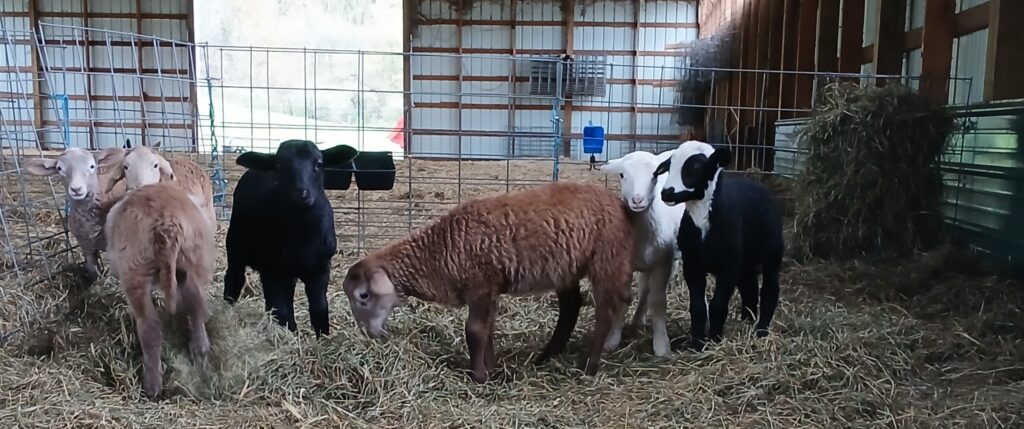
Bottle lambs
Bottle lambs should always have access to water, soft hay and creep feed, in addition to the milk replacer you are feeding them. Timely vaccinations are especially important for this group of lambs.
To successfully raise healthy bottle lambs, it’s important to meet their nutritional needs until their rumens are fully developed and they can thrive on a forage diet alone. Depending on the management system, this can be done by continuing to supplement their diet with a bottle of milk replacer and/or with creep feed. Keeping the lamb with the main flock has the advantage of allowing the lamb to learn normal sheep behavior. However, milk replacer is expensive, bottle feeding is time consuming, and feeding large quantities only once or twice a day makes the lamb much more susceptible to getting sick or dying due to clostridial infections than dam raised lambs in this age group.
Bottle lambs can be weaned off milk as early as 30 days if they weigh at least 30 pounds and eat adequate creep feed to meet their nutritional needs. It is important to start bottle lambs on creep feed as soon as possible, so that they are consuming enough creep feed to be weaned off milk at an early age. Gradually reducing the amount and frequency of bottle feedings will encourage the lamb to consume more creep and soft hay. Monitor the lambs carefully to ensure they continue gaining weight. Weighing bottle lambs weekly is a good way to monitor the wellbeing of your lambs.
Polioencephalomalacia (polio)
Polio is caused by a primary thiamine (Vitamin B1) deficiency or a secondary thiamine deficiency due to sulfur toxicity. Since thiamine is produced in the rumen, any condition that interferes with proper rumen function or causes abrupt changes to the rumen flora can lead to polio. Polio can also be caused by an excessive intake of sulfur from water sources, feed by-products (wet or dry distiller’s grains), treatment with certain coccidiostats or a combination of sources. High sulfur intake disrupts thiamine metabolism leading to thiamine deficiency.
Common signs of polio include blindness, stargazing, muscle rigidity and an uncoordinated gait. If untreated, convulsions and death may occur within 24-72 hours. Polio can affect all ages but is more commonly seen in lambs. Thiamine is the only effective treatment for polio. When treated early, improvement is possible within 2-3 hours, although some cases could take days to resolve. B-complex, available over the counter, contains thiamine but not at the strength needed for proper treatment. Prescription strength thiamine is preferred; consult your veterinarian for treatment advice.
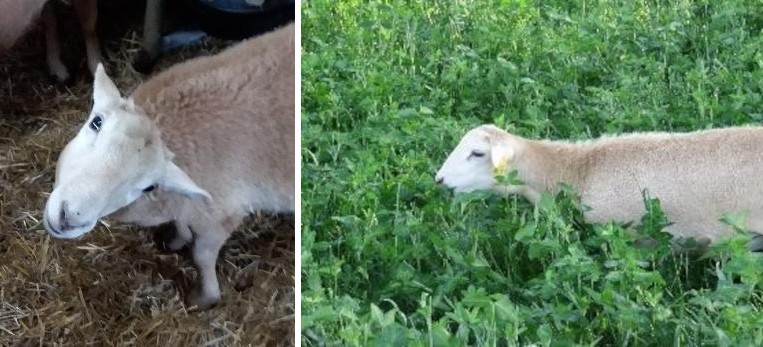
Enterotoxemia (overeating disease, clostridial disease)
Enterotoxemia is caused by an overgrowth of Clostridium perfringens, primarily types C or D, in the intestines. Clostridium is found naturally in the soil and as part of the normal microflora in the gastrointestinal tract of healthy sheep and lambs. Disease is caused by a rapid proliferation of the bacteria producing large quantities of toxins. It is usually associated with rapid changes in diet or excessive consumption of feed high in carbohydrates (grains, lush pastures) and/or low in roughage. Because of rapid onset, finding a dead lamb, often the fastest growing one, is sometimes the first sign of enterotoxemia.
Milk colic is a form of enterotoxemia, most often seen in artificially reared lambs that have been fed large amounts of warm milk in a single meal, or in a single-born lamb whose dam is a heavy milker. Affected animals appear depressed with anorexia, abdominal pain, and/or scours. Supportive treatment with probiotics, anti-toxin and electrolytes can help. Vaccination with CD&T is the best prevention strategy. If lambs are started on grain at an early age, consider vaccinating lambs at four weeks (especially if their dams were not vaccinated before lambing), and follow up with two CD&T boosters, 2-4 weeks apart.
Other digestive disorders (acidosis, grain overload, bloat)
Acidosis is a result of a dangerous accumulation of lactic acid in the rumen, usually seen in lambs abruptly changing to a high carbohydrate diet. If severe It can cause death and survivors can have permanent scarring in the rumen, resulting in poor feed intake and nutrient absorption, poor weight gain and/or chronic diarrhea. Acidosis can cause a deficiency of B vitamins, especially thiamine, so treatment with thiamine is recommended to prevent polio. Lambs with acute acidosis are depressed, are off feed and may have profuse watery diarrhea. They may be found staggering, recumbent, kicking at their belly, or standing motionless with their head down.
A related disorder, frothy bloat, occurs when lambs overindulge in lush pastures with high legume (alfalfa and clover) content. These plants create a stable foam in the rumen, so the gases produced in the rumen are trapped in little bubbles. This prevents normal burping and the lambs become bloated. You see left-sided abdominal swelling that can lead to suffocation and death, if not treated promptly.
An effective strategy to help prevent acidosis and bloat is to offer adequate roughage (hay, grass, forage) before introducing grain to slow intake and promote cud chewing. The mix of cud and saliva acts as a buffer for the rumen. Restrict the amount of time lambs graze on lush legumes, when you first start grazing it, to prevent bloat. Bloat treatments such as Therabloat, baking soda, Kao pectate or mineral oil may help. In severe cases, contact your vet immediately. Artificially reared lambs are at risk of abomasal bloat after ingestion of large quantities of warm milk in a single meal. Using probiotics as an additive can help.
Other conditions that commonly affect young lambs include:
Coccidiosis
Most adult sheep have a low-grade coccidia infection that does not affect them at all. During late pregnancy and early lactation ewes are stressed, and they shed more coccidia in their manure. If bedding is not kept clean and dry, coccidia oocysts will build up in the environment and lambs will be exposed to an overwhelming dose of coccidia oocysts. Healthy lambs that are exposed to coccidia in small doses will naturally build up immunity and have no adverse effects due to coccidia.
Lambs will typically start showing signs of coccidiosis around three weeks of age. Affected lambs have foul smelling, dark colored diarrhea that can have blood and mucus in it. Often, they have belly pain and become dehydrated. Severely affected lambs can die. A severe coccidia infection can cause permanent scarring in the intestines that leads to poor nutrient absorption, chronic scours and poor growth.
It is really worthwhile to keep your lambs from being exposed to large amounts of coccidia oocysts in the environment by:
- Minimizing the exposure lambs have to manure that contains viable oocysts – Ensure you have adequate clean bedding, keep the environment dry (oocysts remain viable much longer in moist environments), do not feed on the ground and keep animals from climbing into feeders.
- Minimizing the number of oocysts in manure – Add coccidiostats to feed or minerals, starting a few weeks before lambing to reduce shedding by ewes. Make sure lambs are getting coccidiostat in their feed or mineral during times of stress/environmental contamination.
Coccidiosis is typically more of a problem in lambs that are housed in barns but can be a problem in pasture if it stays wet and muddy and animals are crowded in the same area for an extended time. Affected lambs should be treated promptly, to prevent permanent damage to the lamb, as well as to reduce environmental contamination.
More information about coccidiosis can be found in the Scours blog.
Barber pole worm (haemonchus contortus)
The barber pole worm is a blood sucking parasite affecting sheep of all ages and causing anemia, weight loss, poor body condition and death. The barber pole worm can lay thousands of eggs daily which are passed in the manure. Once the eggs hatch and develop on pasture, sheep ingest the infective larvae and the cycle continues. The barber pole worm thrives in warm, moist environments. Weaned lambs on pasture are at greatest risk, but late spring born lambs can be affected before weaning. Monitor lambs frequently in the spring and summer for signs of anemia (pale eyelids and mucous membranes) using FAMACHA scoring, and assess weights and body condition. Lambs with signs of anemia, bottle jaw (edema that accumulates under the jaw), weight loss, lethargy and/or poor body condition may require deworming. Only use oral dewormers approved for use in sheep. Use targeted selective treatment strategies, deworming only the lambs that are showing signs of parasitism to maintain efficacy of dewormers and to prevent dewormer resistance. Frequent pasture rotation, reduced stocking rates to avoid overgrazing, selective deworming, accurate dosing (weigh lambs before treatment) and genetic selection for parasite resistance are effective strategies for parasite control. Visit wormx for valuable information on parasite control.
Pneumonia
Temperature swings and prolonged periods of wet weather predispose lambs to pneumonia. Late winter and spring lambing flocks often experience these temperature swings before lambs are weaned. Nutritionally challenged, parasitized and stressed lambs are also more susceptible. Lambs with pneumonia can have snotty noses and cough, but often you will find lambs that look depressed and really miserable, with high fevers. Be sure to treat pneumonia promptly with an antibiotic and anti-inflammatory, as recommended by your veterinarian. Lambs can die or develop permanent lung scarring if not treated promptly. If you see multiple lambs with pneumonia in this timeframe, vaccination of your ewes and lambs can go a long way to preventing problems in the future.
Stress
Stress is a poorly understood but important cause of metabolic imbalance in sheep. While a lamb may be able to take one or two stressors in stride, stacking multiple stressors may lead to serious illness. Cumulative stress weakens the immune system leaving the lamb vulnerable to illness and/or parasite challenges. While it is impossible to avoid all stress, mitigating or spacing at least some of the stressors can make a huge difference. Common stressors include weaning, illness, poor nutrition, vaccinations, weather (hot or cold, especially extremes), mud, dietary changes, parasite exposure, changes in routine, herding dogs, transport, isolation, and overcrowding. Even working lambs to collect weights and check FAMACHA scores can be stressful. In sheep, signs of stress and illness are often subtle until the situation is fairly advanced. Effective early intervention tools include being aware of and mitigating potential stressors and spending some time observing your sheep daily. Take note of small changes in behavior as these are often the precursors to serious illness.
When it comes to the health of your lambs, most problems occurring in the 30-90-day age group can be traced back to three things: lack of adequate colostrum; exposure to an overwhelming pathogen load; and rumen/nutritional concerns. As producers, we can’t prevent all illnesses, but we can try to mitigate the risk by ensuring lambs get sufficient colostrum at birth and that their dams are producing adequate milk; by keeping the barn area clean and well-ventilated; and by introducing feed and lush forage incrementally: start low and go slow.
Even when we do everything right, some lambs will still fall ill. Sometimes we can figure out what’s going on, often we can’t. If a lamb becomes ill, especially if it has a fever, it should be isolated with its dam (if before weaning) or with a companion lamb (after weaning) to prevent the possibility of spreading disease to the rest of the flock. Look for lambs that are struggling to gain weight or are stealing milk from other ewes as this could be an indication that their dam is not producing adequate milk. The dam should be assessed for mastitis or hard bag. Take the time to look at the group as a whole, taking note of any outliers; this will help in making selection and culling decisions later. It’s always easier and cheaper to prevent disease than it is to treat a sick lamb. Good nutrition (minerals, feed, forage) and a healthy, well-functioning rumen are key to raising healthy, thriving lambs.
By: EAPK Communications Committee

